Scarica
Reference document
Ref : At.Md.01
This document is produced by WeART
The information provided is for reference purposes only and shared in good faith.
This document is the property of WeART and may not be used outside the scope of WeART.
Pablo PICASSO
(1881 - 1973)
Pablo PICASSO

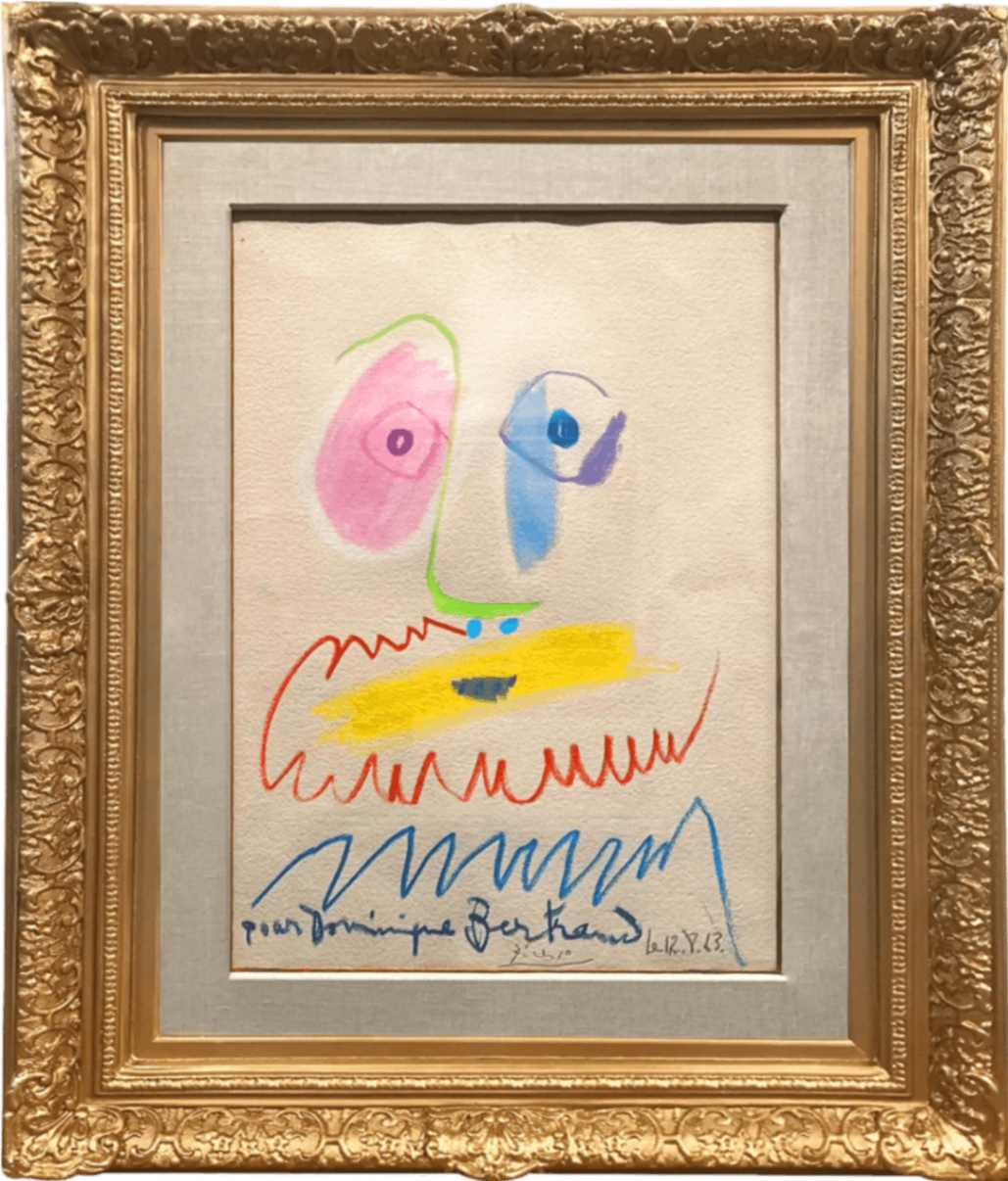
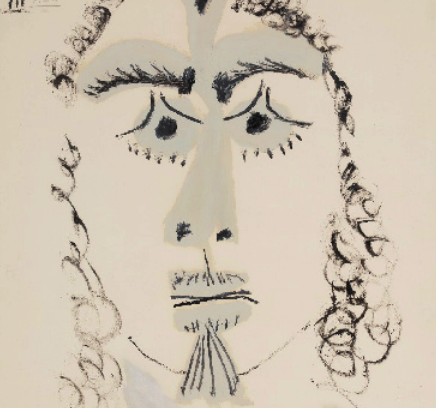
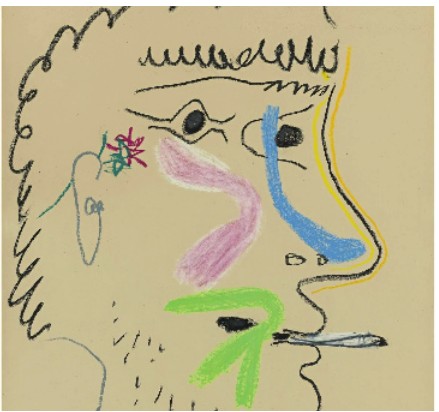
Tête d’Homme Barbu, 1963

Colored pencils on paper

36,8 x 27,6 cm

Dedicated, signed, and inscribed :

« Pour Dominique Bertrand, Picasso Le 12.8.63 »

This drawing by Pablo Picasso has been authenticated by the Picasso Committee on September 12, 2024

This work titled Tête d'Homme Barbu created by Pablo Picasso on August 12, 1963, brilliantly embodies the creative freedom characteristic of his late period. The bold use of colored pencils infuses the composition with playful vitality, reflecting the experimental and uninhibited spirit that defines this phase of his career.

With a line both spontaneous and precise, Picasso captures not only the distinctive features of a bearded man but also the vibrant and dynamic essence of his personality. The relaxed arrangement of forms, combined with a vivid color palette, highlights his unique mastery, where innovation harmoniously merges with tradition to create an image that is both simple and profoundly expressive.

Throughout Picasso's artistic journey, the motif of the bearded man frequently appears, taking on various symbolic and aesthetic meanings depending on the artist’s evolving styles.

The bearded man transcends mere representation to become a universal symbol: creator, thinker, mythical figure, and witness to the passage of time. Through this recurring motif, the artist delves into the complexities of the human soul.

Ref : At.Md.01
This document is produced by WeART
The information provided is for reference purposes only and shared in good faith.
This document is the property of WeART and may not be used outside the scope of WeART.

The motif of the bearded man Picasso's work

The motif of the bearded man appears at various stages of Pablo Picasso's work, embodying different facets of his artistic style and symbolic concerns. At times a mythological figure, sometimes a grotesque character, or even an introspective portrait, it becomes a recurring theme filled with multiple layers of meaning.

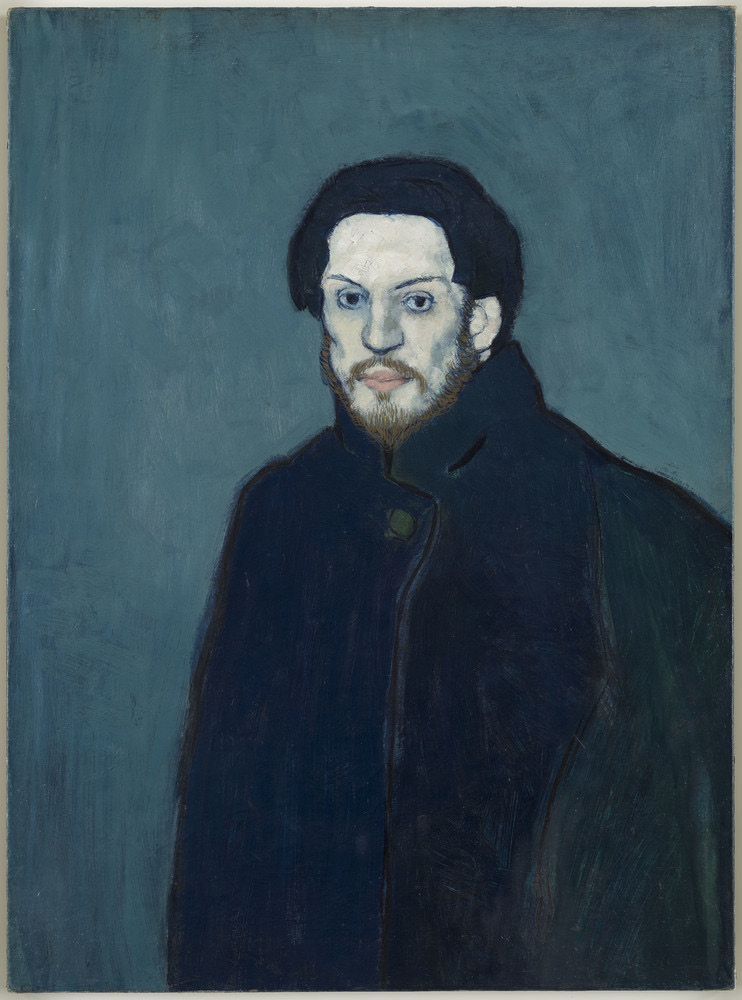
« Autoportrait », 1901, Huile sur toile, 81 x 61 cm, MP4, Musée national Picasso-Paris

Introspection

During the Blue Period (1901-1904), Picasso depicted figures marked by melancholy and inner turmoil. The bearded man often takes the form of elderly individuals with distant, sorrowful gazes, embodying wisdom, solitude, and introspection. Their deeply lined faces, framed by thick beards, express a fragile humanity searching for redemption, comfort, or faint hope.

This portrayal of the bearded man aligns with a universal vision of the human condition, where suffering and dignity are intimately intertwined. Cool tones and elongated contours intensify the atmosphere of silent despair permeating these figures. Through them, Picasso explores not only material hardship but also a spiritual quest—a meditation on mortality and isolation.

These characters thus transcend individual identity to become timeless archetypes, bearing witness to a vulnerable yet resilient humanity confronting adversity with quiet strength.

« Autoportrait », 1901, Huile sur toile, 81 x 61 cm, MP4, Musée national Picasso-Paris

© RMN-Grand Palais (Musée national Picasso-Paris) / Mathieu Rabeau, © Succession Picasso 2020

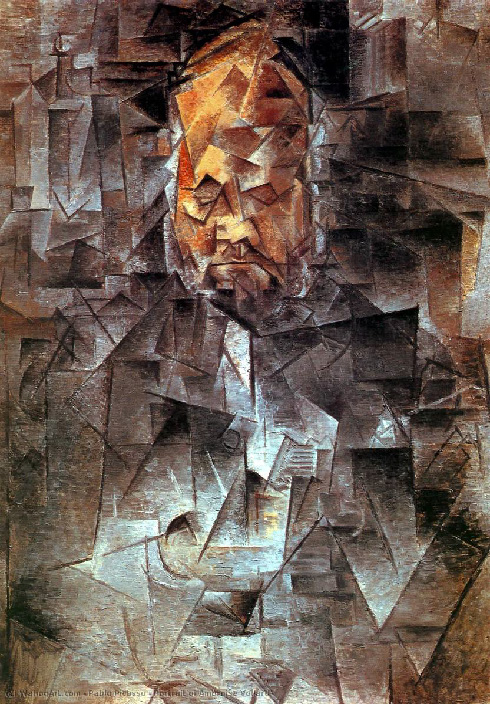
Portrait d'Ambroise Vollard, 1910 (huile sur toile)

Deconstruction

During the Cubist Period (1907-1917), the motif of the bearded man in Picasso's work underwent a radical transformation. Deconstructed into geometric facets, the figure shed its introspective and melancholic aura, becoming a fragmented, almost architectural presence. The beard, once a symbol of wisdom or suffering, evolved into a graphic element—a play of angular and dynamic forms.

This approach is particularly evident in Portrait of Vollard (1910), where the art dealer's beard becomes a sculptural feature central to the composition. Far from being a mere physiological detail, it actively contributes to the construction of volumes and the interplay of light and shadow. Through broken lines and overlapping planes, the beard structures the face, reinforcing the solidity and dislocation that define the piece.

In this Cubist treatment, the bearded man transcends human representation to become a field of artistic experimentation. No longer confined to realistic portraiture, he embodies Picasso's quest to depict reality through a multidimensional lens, challenging conventional visual perspectives.

Portrait d'Ambroise Vollard, 1910 (huile sur toile)

Ref : At.Md.01
This document is produced by WeART
The information provided is for reference purposes only and shared in good faith.
This document is the property of WeART and may not be used outside the scope of WeART.
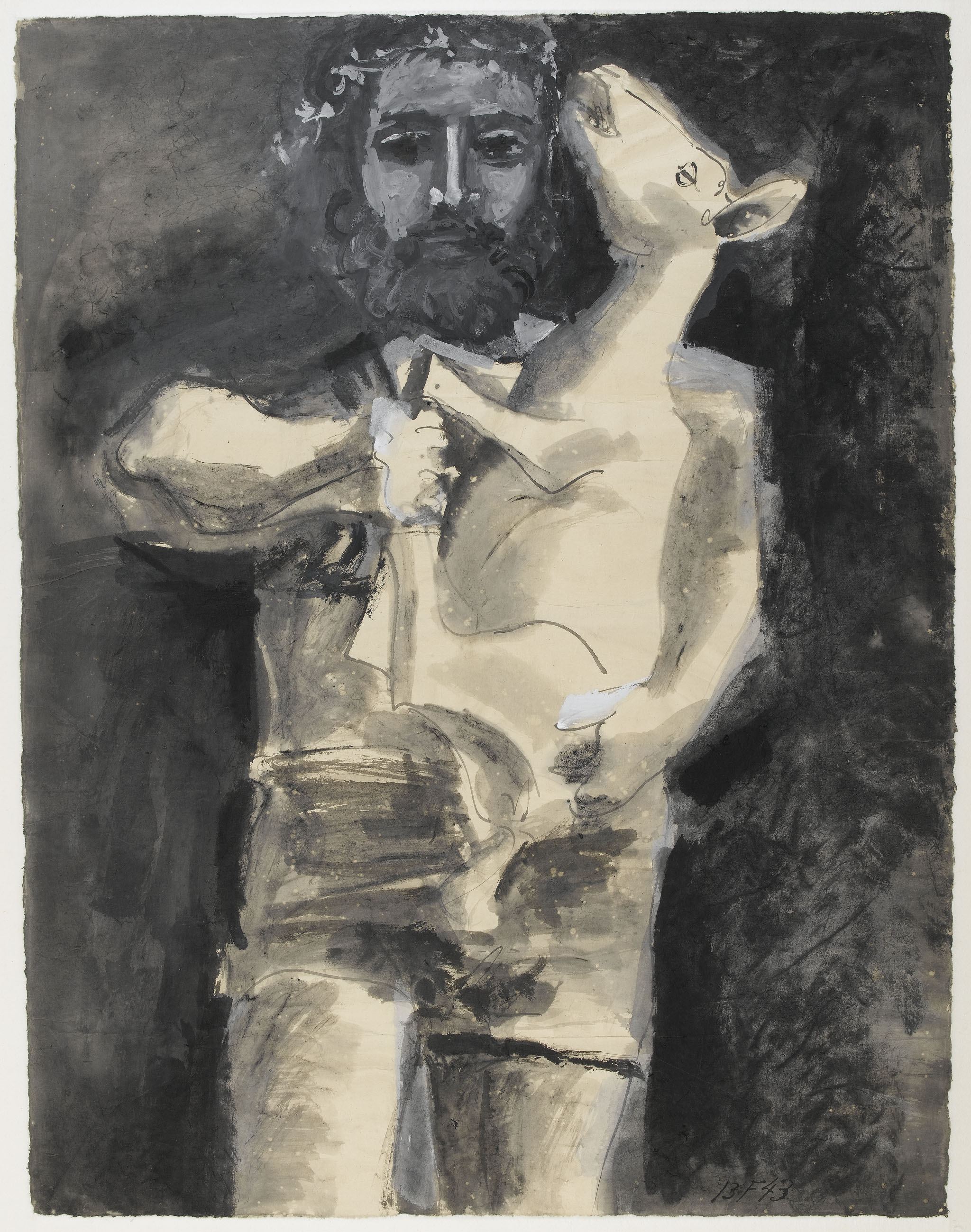
Pablo Picasso, « Etude pour "L'homme au mouton"», 13 Février 1943

Power and Duality

During the 1930s and 1940s, Picasso's portrayal of the bearded man absorbed mythological and classical references, drawing from the rich heritage of Mediterranean culture. Inspired by Greek gods, ancient heroes, and satyrs, he created imposing masculine figures often adorned with luxuriant beards. These representations celebrate virility, creative force, and untamed vitality. The beard emerges as a symbol of both desire and brutality, embodying an indomitable life force.

In works such as Blind Minotaur Guided by Marie-Thérèse with a Pigeon in a Starry Night (1934-1935), the bearded Minotaur exemplifies this duality: a blend of beastly strength and human vulnerability. The beard, primitive and organic, amplifies his mythical aura, shifting between domination and submission to higher forces.

Through this motif, Picasso delves into universal tensions between power and helplessness, desire and surrender. The bearded man becomes a timeless figure where opposing forces coexist, reflecting the complexities of human existence and the eternal struggle between control and fate.

Pablo Picasso, « Etude pour "L'homme au mouton"», 13 Février 1943

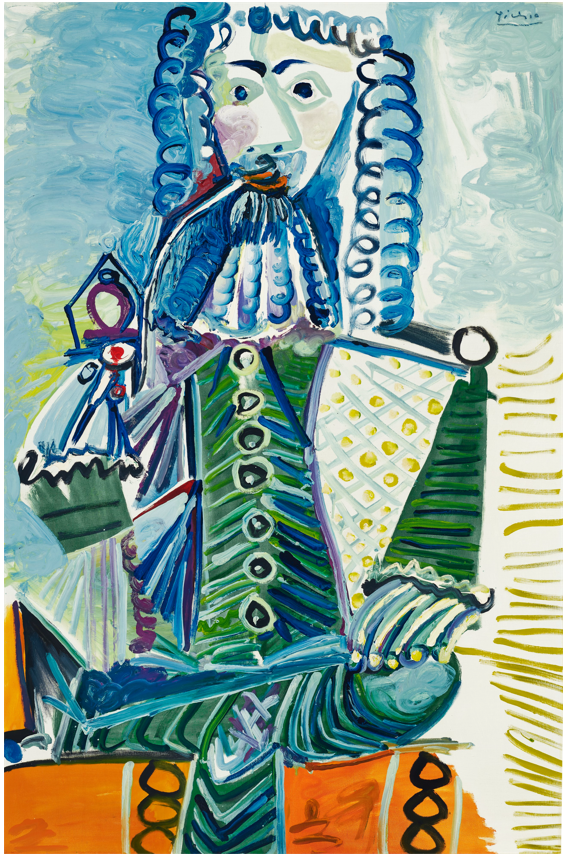
Mousquetaire à la pipe, 1968

Creativity

In his later years, Picasso explored the motif of the bearded man with renewed intensity, particularly through his Musketeer series (1968-1970). Inspired by Old Masters such as Velázquez and Rembrandt, these characters are depicted with thick beards and imposing mustaches, symbols of virility, bravery, and authority. The musketeers embody powerful and timeless masculine archetypes, blending historical grandeur with personal introspection.

The beard becomes a defining feature, marking these figures with a mixture of nobility and irony. At times rendered with precise detail, at others sketched with bold, sweeping brushstrokes, it conveys an untamed creative vitality. These proud, martial musketeers seem to perform roles, oscillating between heroic might and playful caricature.

Aware of his advancing age, Picasso projected himself onto these characters, using their beards as symbols of experience, resilience, and creative power in the face of time’s inevitable passage. Through them, he reaffirmed his artistic mastery, transforming a historical reference into a deeply personal and dynamic expression of identity, memory, and creative immortality.

Mousquetaire à la pipe, 1968

The use of the bearded man motif in Picasso's work goes far beyond a mere aesthetic choice—it becomes a symbolic mirror of the human experience. From the melancholy of the elderly figures in the Blue Period to the Cubist fragmentation, from the mythological power of the Minotaur to the theatrical authority of the Musketeers, this bearded face transcends eras and styles, continually charged with new meanings.

As a symbol of wisdom, desire, struggle, and introspection, it reflects the artist's personal concerns while resonating universally. By shaping and deconstructing this figure, Picasso probes the mysteries of life, time, and creation, leaving behind a timeless archetype that conveys a deeply human and infinitely rich artistic vision.

Ref : At.Md.01
This document is produced by WeART
The information provided is for reference purposes only and shared in good faith.
This document is the property of WeART and may not be used outside the scope of WeART.

Pablo Picasso’s metrics

$ 121,470,295
Auction record
Auction record
3360
Lots Sold 2023
Lots SoldUnsold Lots
$ 501,574,431
Turnover 2023
Turnover

Comparative results of the artwork

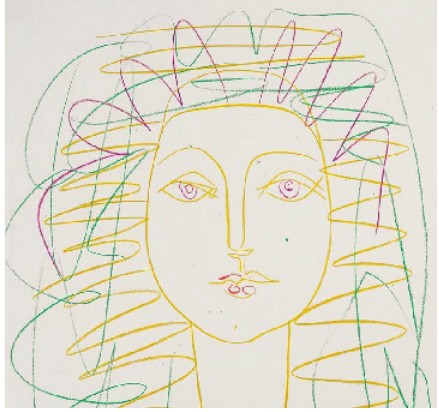
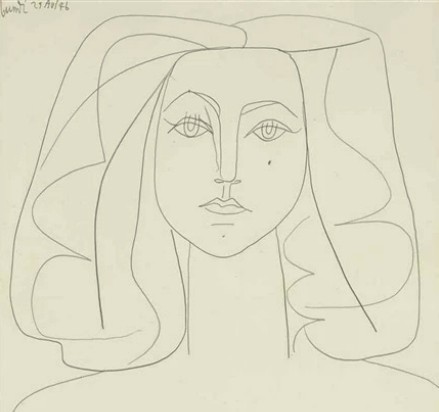
Portrait De Femme (Françoise), 1946

Portrait De Femme (Françoise), 1946

65.7 x 50.5 cm
Christie's 2020
Auction Result
600 000 $Excluding Commissions
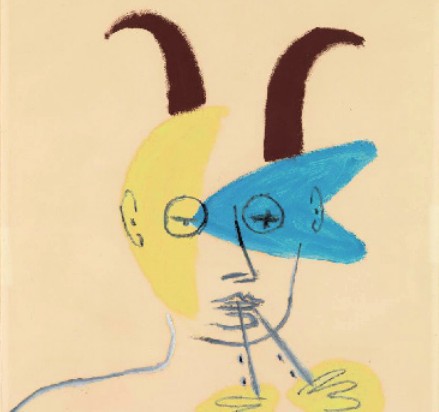
Faune, Joueur De Diauli, 1946

Faune, Joueur De Diauli, 1946

65.4 x 50.9 cm
Christie’s 2008
Auction Result
617 085 $Excluding Commissions
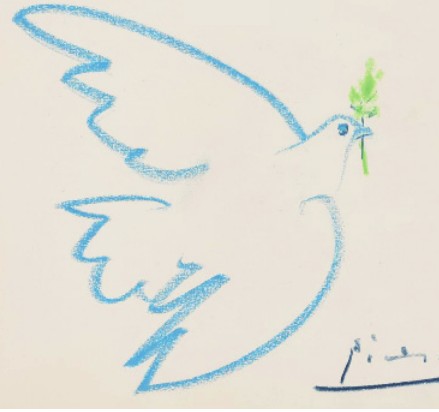
La Colombe, 1958

La Colombe, 1958

41.9 x 27.3 cm
Sotheby’s 2013
Auction Result
653 000 $Excluding Commissions
Portrait De Françoise, 1946

Portrait De Françoise, 1946

65.4 x 50.2 cm
Christie's 2012
Auction Result
670 000 $Excluding Commissions
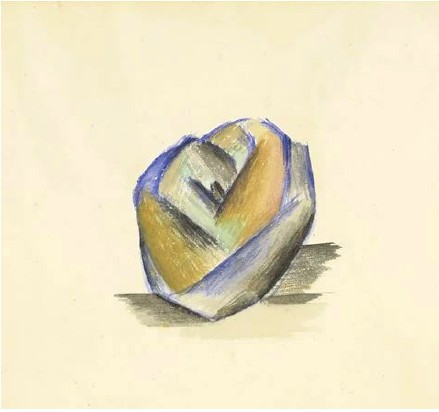
Pomme, 1909

Pomme, 1909

25 x 28.5 cm
Sotheby’s 2019
Auction Result
1 005 793 $Excluding Commissions
Tête D'Homme, 1969

Tête D'Homme, 1969

66.5 x 50 cm
Sotheby’s 2019
Auction Result
492 550 $Excluding Commissions
Tête De Femme, 1907

Tête De Femme, 1907

63 × 48.5 cm
Sotheby's 2020
Auction Result
1 169 291 $Excluding Commissions
Tête D'Homme À La Cigarette, 1964

Tête D'Homme À La Cigarette, 1964

66 x 22.5 cm
Sotheby’s 2008
Auction Result
493 000 $Excluding Commissions
WEART Powered by WEEX
WEART

WEART

  • Home
  • Chi Siamo
  • Artisti
  • Primario
  • Secondario
  • Galleria

Chi Siamo

  • Team
  • Stampa
  • FAQ
  • Novità

Governance

  • Consiglio
  • Struttura
  • Custodia
  • Sicurezza
  • Copertura

CONTATTO

LEGALE

  • Termini di Riferimento
  • Condizioni d'Uso
  • Informativa sulla Privacy
  • Politica di Divulgazione
  • Politica sui Cookie
InstagramFacebook

© 2026 WeART. Tutti i diritti riservati.

Licenza N° 2311026.01

Blockchain
Kaleido
PCI DSS
Logo WeArt
Logo WeArt
Chi siamoArtistiMercato PrimarioMercato SecondarioGalleria